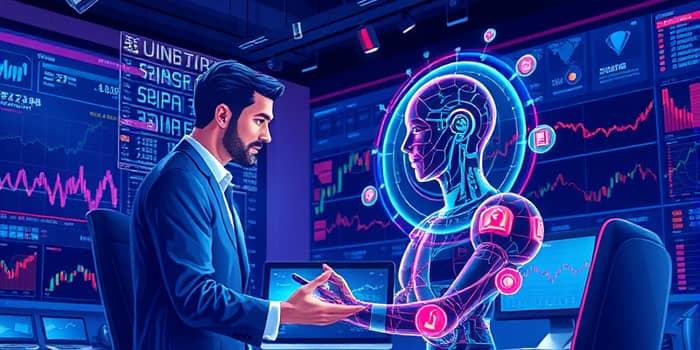
In today’s fast-paced financial world, organizations seek not just efficiency but also deeper insights, ethical rigor, and personalized service. Augmented Intelligence represents a transformative partnership, where human expertise meets advanced algorithms. Rather than replacing professionals, these systems enhance decision-making, fuel innovation, and build lasting trust with clients and regulators alike.
Augmented Intelligence amplifies human capabilities by providing explainable AI models for transparency. Unlike pure automation—where machines execute tasks without human oversight—augmented systems maintain human-in-the-loop decision-making, ensuring that ethical considerations and nuanced judgment remain central.
Key characteristics include context-aware recommendations that adapt to market shifts, real-time collaboration interfaces, and models designed for interpretability. This blend ensures that professionals stay in control, leveraging advanced pattern recognition while retaining responsibility for strategic choices.
At a high level, augmented intelligence touches five core areas:
Client Intelligence (Personalization) systems analyze behavioral and transactional data to deliver hyper-personalized guidance based on data. For example, wealth managers use AI-driven portfolio recommendations, after which human advisors provide empathy-driven conversations to refine strategies and strengthen trust.
Risk Management & Compliance platforms flag anomalies, suspicious patterns, and evolving regulatory mandates. While AI identifies potential issues within seconds, human experts interpret these alerts, making final rulings and ensuring regulatory alignment. This approach saved one global bank an estimated 360,000 hours on contract reviews, dramatically reducing errors.
Fraud Detection models learn from transaction context, seasonal behavior changes, and travel patterns to minimize false positives. Payment providers dynamically adjust thresholds and escalate high-risk cases for human review. A 2016 study estimated these combined efforts save card issuers nearly $12 billion annually.
Trading & Investment Management teams leverage machine learning for correlation analysis, volatility estimation, and predictive modeling. While algorithms automate up to 95% of trades, human portfolio managers review outputs, manage exceptions, and communicate strategy shifts. In some instances, AI-augmented portfolios have outperformed benchmarks by 100 basis points.
Credit Scoring & Underwriting systems incorporate alternative data—such as social or transaction metadata—into multi-dimensional risk profiles. Lenders then apply human judgment to borderline applications, especially for applicants with limited credit history. This synergy has opened credit access to millions of young professionals worldwide.
Implementing augmented intelligence requires careful change management. Firms must invest in upskilling, foster interdisciplinary teams, and build trust in machine-assisted insights. Organizations that succeed in this cultural shift realize cost reductions of 50% or more in routine staffing expenses, redirecting human talent toward value-added services.
Ethical considerations and model governance are equally critical. AI solutions must be designed with privacy-by-design and fairness guardrails to prevent bias and maintain client trust. Transparent audit trails and explainable outputs help satisfy regulators and stakeholders, ensuring accountability throughout every stage of deployment.
Financial services continue to lead in adopting augmented intelligence, recognizing that enduring human expertise drives sustainable differentiation. The emphasis on explainable, trusted AI fosters stronger client relationships and smoother regulatory approval, setting a benchmark for other industries.
Looking ahead, we expect augmented intelligence to expand into strategic management, customer experience enhancement, and real-time risk oversight. Innovations in natural language processing will further personalize client interactions, while federated learning and privacy-preserving techniques will safeguard data integrity across systems.
As competition intensifies, firms that master the art of human-machine collaboration will emerge as industry champions. By blending advanced algorithms with professional judgment, organizations can unlock new revenue streams, elevate ethical standards, and build resilient, client-centric operating models.
In conclusion, augmented intelligence is not merely a technological upgrade—it is a profound shift in how we approach financial decision-making. Embracing this partnership means preserving the irreplaceable value of human insight while harnessing the power of intelligent systems. Together, we can navigate complexity, anticipate change, and create a more inclusive, transparent, and innovative financial ecosystem.
References