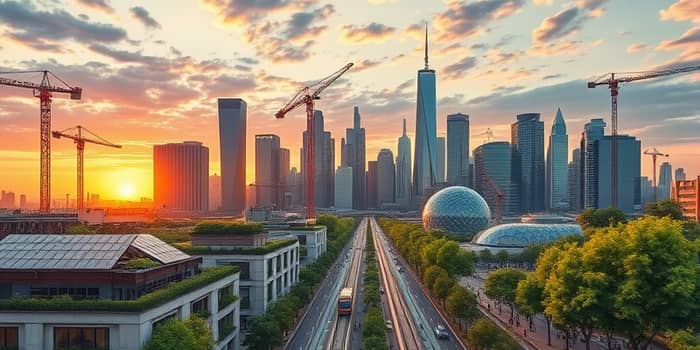
As the world accelerates toward a new urban era, investors, policymakers, and communities face both a challenge and an opportunity of unprecedented scale. Today, more than half of humanity calls a city home, and by mid-century, nearly 7 billion people will live in metropolitan areas. This transformation demands vision, compassion, and strategic capital deployment to shape inclusive, resilient urban landscapes.
In 2025, 58% of the global population is urbanized, marking a historic milestone and signaling the dawn of a profoundly interconnected planet. By 2050, this rate is expected to climb to 68%, adding nearly 2.5 billion new city dwellers. Cities once confined to port and river hubs now span vast regions, driving economic growth, cultural exchange, and technological innovation.
Economic opportunity, industrialization, and rural-to-urban migration fuel this shift. As megacities dot every continent, urban regions contribute over 80% of global GDP. Yet, this expansion also intensifies demands on housing, transport, and utilities. To harness these dynamics, stakeholders must align infrastructure development with human aspirations.
Urbanization rates vary widely: North America leads with 82%, followed by Latin America and the Caribbean at 81%, and Europe at 74%. Asia, though only half urbanized by percentage, hosts 54% of the world’s city-dwellers, while Africa, at 43%, is the fastest urbanizing continent with some nations exceeding 5% annual growth.
By 2050, India alone will add 416 million urban residents, China 255 million, and Nigeria 189 million. In contrast, some developed regions face stagnation or decline; Japan and parts of Eastern Europe are witnessing shrinking city populations due to low fertility and emigration. These divergent trends underscore the need for tailored investment strategies and governance models.
Historically, urbanization has mirrored economic revolutions—from manufacturing booms to digital transformations. Today, globalization, service economies, and high-speed connectivity accelerate city expansion. Young populations migrate to urban centers, seeking education and employment, while aging societies in advanced economies reshape urban footprints through redevelopment.
Technological advances such as high-capacity transit, renewable energy, and data-driven planning optimize resource use. Yet, balancing rapid growth with social cohesion requires proactive policies and public-private partnerships that prioritize equitable access to services and foster economic opportunities and livelihoods.
Megacities—urban areas exceeding 10 million residents—are proliferating. By 2030, 43 such agglomerations are projected worldwide, predominantly in developing regions. Mega-regions transcend political borders, integrating satellite towns, corridors, and industrial parks into vast economic ecosystems.
Emerging hubs like Guangzhou grew from 2 million in 1975 to over 40 million today, while Dhaka’s population soared from under 5 million to 33 million in 2020 and could reach 40 million by 2035. These surges highlight both the dynamism and the governance challenges inherent in megacity management.
Rapid urban expansion exerts immense pressure on existing systems. To ensure livable, resilient cities, stakeholders must confront several interlinked challenges:
Climate risks such as flooding, heat islands, and air pollution further complicate planning. Addressing these issues demands infrastructure renewal and expansion that is both robust and adaptable, integrating green design, digital monitoring, and community engagement to build truly sustainable urban ecosystems.
Investment requirements in urban regions are staggering, yet the returns—economic, social, and environmental—can be transformative. Key focus areas include:
Allocating capital wisely can catalyze growth, especially in low- and middle-income regions where needs outpace resources. Strategic partnerships between governments, development banks, and private investors are essential to mitigate risks and unlock sustainable urban infrastructure investment with long-term impact.
The UN’s 2030 Agenda for Sustainable Development underscores the necessity of integrated urban-rural planning, inclusive infrastructure development and poverty reduction, and climate resilience. Effective policy frameworks promote densification, mixed-use zoning, and robust urban-rural linkages that distribute benefits across regions.
Case studies from around the globe illustrate success: brownfield regeneration in European cities, flood-resilient design in Southeast Asia, and innovation corridors in North America. These examples demonstrate how coordinated policies can transform complex challenges into competitive advantages.
As the world urbanizes at an unprecedented rate, the choices made today will define the quality of life for billions. A collective commitment to the future is required—one that combines visionary planning, technological innovation, and community-driven solutions. Investors and policymakers alike must embrace bold strategies that balance profitability with social responsibility.
By championing sustainable development, fostering inclusive growth, and investing in resilient infrastructure, stakeholders can help cities become engines of prosperity, equity, and environmental stewardship. The path forward demands collaboration, creativity, and unwavering resolve to shape cities that uplift every resident and stand the test of time.
References